Posts

Showing posts with the label Wakayama

Flooding

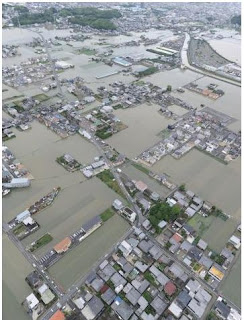
Image
16 amazing photos of flooding around Wakayama City after the recent downpour, from the Mainichi .

Dalai Lama At Mt Koyasan

Image
The Dalai Lama is visiting Japan. After his lecture at Mt Koyasan, he will go to Sendai to talk to people in the region who survived the March 11 earthquake and tsunami. Asahi Shimbun: Dalai Lama delivers sermon at Mount Koyasan The Dalai Lama gave a sermon at Wakayama Prefecture's Mount Koyasan, one of the most sacred sites in Japanese Buddhism, on Oct 31, during his first visit to the area in 31 years. The event, organized by Koyasan University, was intended to promote academic and cultural exchanges between the Koyasan Shingon Buddhist sect, which is headquartered at Sohonzan Kongobuji temple at Mount Koyasan, and Tibetan Buddhism. About 800 people, including young monks and members of the public, attended the event. At the beginning of the sermon, the Dalai Lama told the audience that he wanted to share, as a friend, the sorrow and pain of the Great East Japan Earthquake. He and Yukei Matsunaga, chief administrator of the Shingon sect, answered questions from the audience. The ...
Sada Masashi: Reserved Tickets

Image
I'm going on a big trip (again) tomorrow, September 11. Starting in Nara, then to Koya-san in Wakayama prefecture, a temple area with 1,000 years of history. Just called them today to ask if the typhoon had any impact, but they were OK. Remember that post I did about incense from Koya-san? Incense From Mt Koya, Kyoto Incense is a fragrant stick or powder, lit and let burn or rather glow to give your room a special atmosphere. It is often used at temples, and has since ancient times played an important role in Buddhism, for example at Mt Koya in Japan, in the Kii Mountain Range in Wakayama prefecture south of Osaka and Kyoto. Here I found a most wonderful shop, called Koyasan Daisido, selling many kinds of incense for different types of ceremonies. They also display fragrant wood from various countries in Asia, including Vietnam, which are increasingly rare and difficult to find. I do these trips to learn more about the country I reside in. After this, I go to Korea for the first wo...

Just Another Typhoon Approaching Tokyo

Image
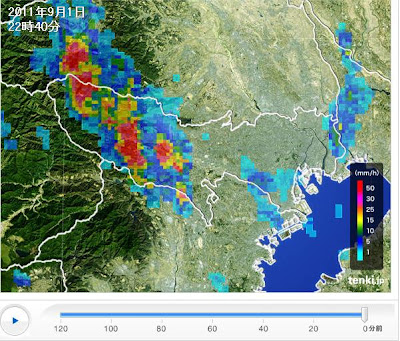
Tomorrow Friday: just another typhoon over Tokyo and trains may not be running as usual. Not something we worry a whole lot about here, but still, it has been a busy summer, after the horrific spring. When people get delayed by train services in Tokyo, they get a printed slip from the train line as they exit. It explains the reason for the delay. When arriving late to the office, this slip helps people feel less stressed about the problem, and as delays are infrequent, companies accept such slips. A wonderful token that makes up for the inconvenience of being late. A typhoon is approaching Tokyo tonight, one of many this time of year. Not an unusual event, yet we all worry in case we get caught in massive 50mm+ rainfall. Friday should be rather bad. Why not just work from home? Somehow, the old office is still so very important in Japan. A little more flexibility could do miracles for morale. Managers and bosses could just have made it an informal work-at-home day, if someone up higher...

100 Years Of Aviation In Japan: The Pioneers

Image
No aviation without brave pilots: There were people fascinated with flight even in the Edo period, such as Ukita Kokichi from Okayama, who made attempts at calculating what wingspan would be needed to let man soar like a bird, something he seems to have achieved in 1785: Ukita studied how birds fly. He finally concluded, "Compute the ratio of the wing's area to the body's weight and use that ratio to create an artificial wing. Humans may use them to fly like a bird." His skill of paperhanging was very useful for making wings. He made the wings' ribs of bamboo, covered them with paper and fabric and varnished the surface with lacquer from Japanese persimmons. (Source: Wikipedia ) Fast forward to the late 19th century, and we have Chuhachi (Tyuuhaci) Ninomiya, who made paper planes that may have been able to carry a man. The first airplane flight in Japan was likely on 29 April 1891, when a propeller-driven unmanned plane took off and flew about 10 meters at a heig...

Local Trains: Using The Seishun 18 Tickets

Image
Regular readers of Kurashi know I like trains , and local trains are a great way to get around in rural Japan. Sure, Shinkansen gets you from A to B really fast, but you may want to see a bit more of the country than the high speed allows for. Also, many great traditional towns and historically fun places (as well as hot spring resorts) are off the much-beaten flashy-new trunk line track. I visited Takayama over the past few days as my old friend Tom was ending his first WWOOF stay/organic farming/weeding-in-the-35 C-sunshine-experience in Gifu prefecture. We decided to get the incredibly cheap Seishun 18 Tickets to get around on a lazy, hot August day, with the occasional thunderstorms thrown in for added excitement. The Seishun 18 is a deal where you buy five tickets for unlimited use on local trains. From Wikitravel : The ticket is actually five one-day passes condensed onto a single piece of ticket stock. When using the ticket for the first time, the passenger presents it at the ...

Incense From Mt Koya, Kyoto

Image
Incense is a fragrant stick or powder, lit and let burn or rather glow to give your room a special atmosphere. It is often used at temples, and has since ancient times played an important role in Buddhism, for example at Mt Koya in Japan, in the Kii Mountain Range in Wakayama prefecture south of Osaka and Kyoto. Here I found a most wonderful shop, called Koyasan Daisido , selling many kinds of incense for different types of ceremonies. They also display fragrant wood from various countries in Asia, including Vietnam, which are increasingly rare and difficult to find. I was surprised to discover actual twigs or cuts from branches of 伽羅  kyara or agarwood : The odour of agarwood is complex and pleasing, with few or no similar natural analogues. As a result, agarwood and its essential oil gained great cultural and religious significance in ancient civilizations around the world, being mentioned throughout one of the world's oldest oral texts - the Sanskrit Vedas from India. You can ...

Vintage Japan: Tiger Oil Advertising Sign

Image
This morning I was (rudely) awakened by the call of the local gasolin truck, making his rounds for the benefit of some of my fossile fuel-burning neighbours. He has a loud sound track, on his small truck, playing a cheesy clarinet tune, and a young lady announcing, endlessly and cheerfully so, on a tape loop: "Tooyu hanbai, 18 liter, 1380 yen!" ("Selling 18 l of heating gas for 1380 yen!") while he slowly makes his rounds. Once upon a time, in a country far, far away... There was an oil company putting up metal advertising signs with its 虎印灯油 (Tiger Brand Oil) logo all over the place. It seems very retro today, and Japanese bloggers are delighted when they find one, even if it is rusty. People who were born in the bubble economy days can afford to be nostalgic, at least for now. The "Put A Tiger In Your Tank" advertising campaign introduced by US oil company Humble in 1964 was even popular in Sweden when I was a kid. Did they get the idea from Japan, or d...

Green Lantern for Local Food

Image
Japanese restaurants are getting into the local foods movement by joining Green Lantern (midori-chochin), a non-profit organization in Sapporo. The movement is the brainchild of Kiyoaki Maruyama at the National Agricultural Research Center in Tsukuba in Ibaraki Prefecture. Maruyama registered midori-chochin as trademark and an umbrella maker in Wakayama manufactures the lanterns, according to Yomiuri Shimbun. Another positive result of efforts to use more local ingredients is the reduction of green house gas emissions. Food is shipped across the oceans while Japan struggles to fulfill its Kyoto obligations. Some Japanese food companies are switching from trucks to rail transport to avoid the long-haul domestic routes. However, the Green Lantern movement is focusing more on directly supporting local farmers. Japan’s low self-sufficiency is a topic that gets a lot of attention here, and appeals more to small restaurants. Keeping it simple is a great idea. Yomiuri Shimbun: Green lanterns ...