Posts

Showing posts with the label architecture

Ghibli At Edo-Tokyo Open Air Architectural Museum

Image
One of Tokyo's most unusual museums is located in Koganei Park, west of the central parts of the city. It is a large park with a lot of space for kids to run around and much to see and do. If you like Ghibli animation films, now is a great time to visit. Until December 14, 2014 they are holding a special exhibition celebrating Hayao Miyazaki's Studio Ghibli and its many talented artists. The famous studio, by the way, is also located in Koganei City near the park. There is nothing on the official English website, and I do hope they will do more to help people who don't read Japanese to get to know the many architectural treasures and historical buildings in the park. Access to the Open Air Museum (E) Rocket News 24 has more: With nearly 400 different pieces including full 3-D models, landscape paintings, and notes and other material about the anime buildings, the exhibition looks to be a great way for Ghibli fans to get a deeper view of what was happening be...
Zuiganji In Matsushima: How To Restore An Ancient Zen Temple

Image
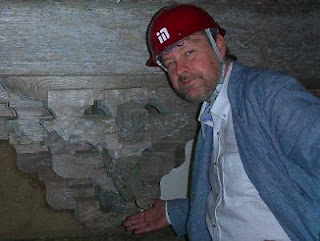
I had the great pleasure of getting a personal tour of the restoration that is going on at a famous temple in Matsushima, Miyagi Prefecture, which was partially damaged by the earthquake and tsunami on March 11, 2011. In fact, the tsunami didn't reach all the way up to the temple buildings, but just meters from the main gate. Did the ancient founders of this holy place know something that we don't? I guess so. Zuiganji dates back to 828 when Ennin founded Enpukuji (Matsushimadera) in these parts. There are still huge living trees that are at least 800 years old on the premises. And there are religious art from as far back as the Heian period, i e before those trees were first grown. The main building of the Zuiganji temple is currently covered by a tent-like construction cover, so if you do visit Matsushima, you can see other interesting buildings like the kitchen and the museum, which are well worth your time. Imagine you are in the early 1600s and...

Montessori For Kids: Fuji Kindergarten

Image
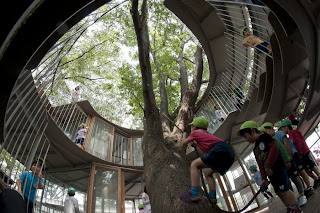
A Montessori kindergarten in Tokyo? I had no idea. Over 600 pupils. And their school is designed by a couple of architects who have children themselves, and wanted only the best, based on studies. This was done back in 2007, and it turns out that this is one kindergarten with no bullying, and no violence. Well, I'm sure kids are kids... But, I'm also sure the Italian-born Maria Montessori would have approved. The point is, as I learnt on Monday listening to Tezuka Takaharu describe this OECD-lauded project, is the slope. The entire shape tints, and kids just love it. If it was an ordinary running track, there would be no fun, no exploration, no discovery. The roof shape and angle is an invitation to go for it. However, when CNN visited, some kids got hurt. Thus this haven is very careful about visitors. Plus there are trees to climb, great zelkovas. And there is also an annex: While the main building is elliptical, lacking a precise center, the annex has a clear fo...

Happy New Year

Image
Wishing all my friends and family, and everyone who reads Kurashi, a very happy new 2013. Everyone of you is special. Enjoy this beautiful slideshow video with images from Nonin-ji, a temple with a 500 year history here in my parts of the wood in rural Saitama, Japan.

Akasaka State Guest House In Tokyo

Image
I may be going to this on Sunday... http://nettv.gov-online.go.jp/prg/prg2534.html Rarely open to the public, I always wondered what it was like. A neo-baroque building and gardens from 1909 in the middle of Tokyo. The Main Entrance is overlooked by a balcony; above runs a patina-green roof adorned on either side by representations of Japanese helmet and armor. In the center right below the roof is an insignia bearing the Imperial chrysanthemum design. Marble from Italy, France and Norway (!) according to the official website . Halls are also inspired by themes from Noh theatre, such as the Hagoromo-mo-Ma. The name Hagoromo-mo-Ma comes from the imposing 300 squre meters painting on the ceiling, which depicts scenes from the Noh play "Hagoromo" (Robe of Heaven). The three chandeliers in this room are the most gorgeous ones in the Palace. Each chandelier is composed by 7,000 pieces, three meters in height and weighting 800 kilograms. The walls are decorated ...

Miho Museum, Meeting Remarkable Men, Mr. I. M. Pei

Image
Sometimes in life, you get lucky, and you get to visit great places. You feel at peace with all things in the universe. Then, you get to meet unusual people, like in the classic film by Peter Brook from 1979. Meetings With Remarkable Men (Part 1 of 11) Meetings With Remarkable Men (Part 2 of 11) Then you get to just by chance meet someone who has designed the very building you are in, a museum in Shiga prefecture, the Miho Museum . I go there from time to time, I like the place a lot, it has a special concept of "beauty" and the viewpoint is "from East Asia" which makes it distinct from a lot of other ordinary museums. Art history, viewed from Japan, and also with a very feminine touch. We tend to ignore that perspective, but a woman with an artistic sense, like at Miho, can change everything around. The female touch has been a very important part of art in Asia, since ancient times. The English website does not quite explore this connection to Grandmother, ...

James Turrell At Naoshima

Image
I went back to Naoshima again in September, staying at the Benesse Art Site . There are a number of installations in the town and a couple of spectacular buildings by Tadao Ando. The view of the Seto Inland Sea makes it even more beautiful. This time, however, what really caught my attention was the works by James Turrell. He makes large rooms and space where light itself becomes the object. You actually step inside his art. It cannot be described, it has to be experienced. He notes that he works with frequencies of light that resonate, based on distance to the wall ahead of you. In other words, what you see is what your brain creates out of the visual stimula. Leave it to your mind to appreciate the rest. Open Sky (2004,Naoshima) can be viewed at anytime, but a special sunset viewing, Night Program, is also available. From wikipedia : Turrell's works defy the accelerated habits of people especially when looking at art. He feels that viewers spend so little time with the art that i...

Osaka: Austrian Artist Hundertwasser In Japan

Image
Friedensreich Hundertwasser was an amazing artist from Austria. He helped design the Maishima Incineration Plant in Osaka. I like how he was always interested in all aspects of life, making even the most mundane aspects of life more artistic - such as toilets and garbage: ...According to the guide, the plant didn’t cost any more than a traditional one because they cut corners in other areas. Inside, visitors will see what must be the world’s cleanest incineration plant. The whole place is spotless, high-tech, well-decorated and modern. Trucks pull up to a giant garbage pit, and two giant robotic hands (each 6m in circumference) pick up the garbage and dump it into a huge incinerator. The plant can handle 900 tons of garbage a day and is extremely impressive. If you are interested in finding out more about this quirky waste disposal icon, free tours are available with reservations. There is a good English pamphlet available but the guides do not speak English so please arrange an interp...

"Sustainable" Japan Pavilion At Shanghai Expo

Image
I'm impressed with Japan's Pavilion at the Shanghai Expo, with the focus on "soft" issues: ...the ideal of "coexistence with nature" that was incorporated into Expo 2005 Aichi Japan, an event that was highly praised as a 21st century expo seeking to resolve global issues. As we do so, we plan to give visitors an opportunity to learn of Japan's true nature and to present a picture of sustainable 21st—century urban living. The Mainichi has more, quoting experts who ...say Chinese visitors should learn Japan's industry and energy-saving and environment protection technology as China moves closer to becoming a developed country. The Japan Pavilion features a futuristic "zero-emission town," a municipality that emits no carbon dioxide by the year 2020 with the use of 20 types of environmental technology including a power-generating window, whose glass is covered with clear, thin solar cells, and steelmaking with hydrogen, which would reduce CO...

Expo Osaka And Expo Shanghai: 40 Years Later, Have We Learnt Anything?

Image
The theme of Expo 2010 in Shanghai is Better City, Better Life, representing "the common wish of the whole humankind for a better living in future urban environments." Really? I'm sure most of mankind, especially everyone living in rural towns and farm villages, in remote places in mountains or near rivers, lakes and on islands in the ocean, have a very different opinion, but OK. We all hope the city folks will do allright. It is 40 years since the Osaka Expo in 1970. My aunt's husband is an architect and city planner. As a young lad he and bunch of others flew over to Japan, rented a car, drove on the left side of the road and went to the Osaka Expo. It was a huge inspiration and he has some amazing slides and a lot of stories, that I enjoyed as a child. Several bloggers have noted the anniversary, including Pink Tentacle : The 1970 World’s Fair — a.k.a. Expo ‘70 — opened in Osaka 40 years ago this week. A total of 77 countries attended the event and the number of v...

400 Year Old Sake Company Creates Rooftop Garden In Tokyo

Image
In 1971, sake brewer Toshimaya was prosperous enough to construct a brand new headquarter building in Tokyo. They probably took one look at the blueprints and thought it was the sexiest design ever: straight lines, simple features. Think modern, modern, modern. Recently, however, they remodeled this drab, sterile (well, molding is probably more accurate) concrete cube with a terrific roof garden, as part of Japan’s movement to reduce CO2 emissions, called Minus Six Degrees. This is an effort that quickly paid off, with staff clearly inspired to do more to reduce greenhouse gas emissions and think about environmental issues. The before-and-after photos are striking. Previously, this was a company that promoted its rice liquor with snappy slogans like "For Mountains, it’s Fuji, for Shirozake, it’s Toshimaya." Comparing your traditionally made sake to the tallest mountain in the country was probably good enough back in the 1970s. Recently, they felt the headquarter building was...

Tokyo residents still "yellow"?

Image
Sorry for the poor joke in the title, hope noone takes offence, but the "green" trend here in Japan obviously needs to be backed up with action - and education. What Hakuhodo has found is that more than 40% of Tokyo residents "don't want to sacrifice a convenient lifestyle to prevent global warming." Hakuhodo calls this the "Eco Dilemma" 1) Hakuhodo is a large advertising agency that also looks at lifestyles. The report is in Japanese, called Research News 「世界8都市・環境生活調査」 2) and I do hope they will translate it to other languages soon. AFP/Yahoo has more details : In a list of 27 daily activities considered to counter global warming, from taking only short showers to participating in tree-planting activities, Tokyo residents only scored above average for five of them. In particular, Tokyo dwellers came last when it comes to studying about global warming or preserving the environment. They also ranked lowest when it comes to buying eco-friendly product...

Frank Lloyd Wright in Japan

Image
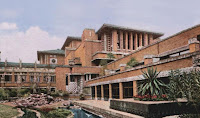
There are actually quite a few buildings in Japan designed or inspired by Frank Lloyd Wright, as mentioned in P's fascinating post previously here on Kurashi: Magnificient Obsessions (thanks!) The Imperial Hotel in central Tokyo was a landmark until the late 1960s. Old Tokyo has some wonderful photos from postcards, that I imagine some of you may have in your grandfathers' collections... Wow, have a look at that luggage sticker - Imagine having that on your suitcase back in the 1920s or 1930s! Here is the entrance of the Yamamura House in Hyogo prefecture, also known as the Yodoko House . It was completed in 1924. But this is also about people. Arata Endo was one of the Japanese architects who studied Wright's philosophy. This helped him to build his ideal view of organic architecture: "to find a point where humans and architecture meet, to make architecture the art based on everyday lives, and not to classify architecture into practicality, science or art." I ...

Magnificent Obsession

Image
As we explore a healthier lifestyle, an oft overlooked but very important aspect of our lives is architecture. Modern cities and their suburbs are often bleak, impersonal places which are uncomfortable to live in, both physically and spiritually, and are unsustainable both in their construction and energy use. Organic architecture addresses these issues, creating buildings with spaces that are both pleasing and practical. Many people know that Frank Lloyd Wright designed the Imperial Hotel in Tokyo (completed 1923), but few are aware of how much time he spent in Japan, how pivotal that hotel was in his career, the other buildings he designed here, or the lasting influence he had on the many Japanese architects who studied under him and worked with him. Unlike the bleak modernist buildings of concrete slabs (Japanese public schools leap to mind) and the monolithic towers of cities today, Wright's organic designs emphasize the unity between man and nature. His buildings are scaled...

The Value of Heritage

Image
Received a nice email from David Kilburn, who lives in Seoul and debates the development of the old parts of the Korean capital, with hanok houses. In a letter to Seoul Development Institute he notes that their report about the way Seoul is dealing with its historical district is not entirely correct: "...the original plan is excellent and its goals are achievable, worthwhile, and affordable. How tragic that the implementation has been so marred by incompetence, negligence, and corruption." David also sent a link to a nice blog called London Korean Links with impressions from this lovely part of Seoul. Read David's essay The Value of Heritage: The Problem in South Korea ...South Korea's track record in preserving its own heritage has achieved only mixed results as large amounts of heritage are destroyed every year. For example, although the Changdeokgung Palace has been lovingly restored, the neighbouring Bukchon area is being relentlessly developed as buildings fr...

Living beautifully

Image
I do admire people who can live beautifully. David Kilburn, the tea merchant and writer who has a hanok house with his wife in Seoul, seems to have won a round against the city hall officials who threatened to destroy the traditional neighbourhood where he lives. Director Kim Ki-duk , who made Spring Summer Fall Winter and Spring , filmed scenes for his 2004 film 3-Iron at David's house. You can watch both trailers on the links above. ...It was last October when the idea first came to me. I was removing a flyer that was pasted over the keyhole on my front door when it suddenly occured to me that the houses that had these ads intact for days must have been empty. The image of an empty house that noone enters led to a story of a very lonely person cut off from others. And I wanted to make a film about a man who goes in and fills that emptiness with warmth. People who play golf would know that the 3 Iron is the least used club. Imagine the 3 Iron stuck in an expensive leathery golf b...

Update on the destruction of hanok houses in Seoul

Image
In Seoul, David Kilburn, owner of a traditional hanok house in the district of Kahoi-dong, is fighting against government policies and land speculators that have converged to threaten the district that has the feel of Seoul of 100 years ago. Recently, this battle became personal, as he was pushed by an architect/site manager, and hurt his back so bad he had to enter hospital. Kilburn, a tea merchant and former journalist, says he isn’t by nature a social activist but as his Swedish neighbor rebuilt and expanded his hanok, there was damage to Kilburn’s home: "The more we investigated the situation to save our own home, the more we realized that the whole district is in danger because of government policies and land speculators," he said to the Korea Times. By providing low interest loans for people who want to rebuild their hanok, the government is encouraging the destruction of the traditional houses, he argued. "The owners of one house were given a government grant of 3...

Saving hanok houses in Seoul

Image
Hanok Village in Seoul Hanok houses are traditional Korean homes, made from wood, paper and other natural materials. They are often introduced on Korean websites and in guidebooks in glowing terms, describing their beauty, silence and harmony as quintessentially Korean. So I was really interested in an article today that describes a 62-year-old Englishman and his Korean wife, who are leading a struggle to save Seoul's last district of traditional homes: David Kilburn and his wife Jade, owners of a traditional "hanok" in the district of Kahoi-dong, say government policies and land speculators have converged to threaten the district that has the feel of Seoul of 100 years ago. Kilburn, a tea merchant and former journalist, says he isn't by nature a social activist but was pushed into it as his neighbor rebuilt and expanded his hanok, causing damage to Kilburn's home and encroaching on his property. "The more we investigated the situation to save our own home, ...